Pickleball and tennis share a common ancestry and similar visual appeal, but their courts are distinctly different in size, layout, markings, and usage. For facility planners, players, and sports enthusiasts, understanding these differences is essential when building, converting, or choosing a court. Although both sports use nets, rackets or paddles, and boundary lines, the structural and spatial requirements vary in meaningful ways. A careful comparison reveals why a pickleball court cannot be treated as a small tennis court—and why a tennis court cannot always accommodate pickleball without modification.
TLDR: Pickleball courts are significantly smaller than tennis courts, with unique markings such as the non volley zone that have no direct equivalent in tennis. Tennis courts require more space around the playing area, higher nets at the posts, and different surface considerations. While a tennis court can be adapted for pickleball, the experience and line configuration differ substantially. Choosing between the two depends on space availability, player needs, and intended level of competition.
1. Overall Court Dimensions
The most noticeable difference between a pickleball court and a tennis court is size. Pickleball was designed as a compact, accessible sport, whereas tennis requires a broader playing field to accommodate longer rallies and faster ball travel.
- Pickleball Court Size: 20 feet wide by 44 feet long (for both singles and doubles)
- Tennis Court Size (Doubles): 36 feet wide by 78 feet long
- Tennis Court Size (Singles): 27 feet wide by 78 feet long
This size difference is substantial. A regulation tennis court is nearly three times larger in total playing area than a pickleball court. Because of this:
- Footwork demands differ significantly
- Court coverage strategies change
- Installation and land requirements are not comparable
In fact, up to four pickleball courts can sometimes be constructed within the area of a single tennis court, depending on layout and spacing requirements. This efficiency is one reason for pickleball’s rapid growth in recreational spaces.
2. Court Layout and Markings
While both sports divide the court with a net and mark boundaries clearly, the specific line configurations differ considerably.
Pickleball Court Layout
A pickleball court includes:
- Baseline
- Sidelines
- Centerline
- Two service courts
- Non volley zone (the “kitchen”)
The non volley zone extends 7 feet from the net on both sides. Players may not volley (hit the ball out of the air) while standing in this zone. This rule is fundamental to pickleball strategy and has no direct equivalent in tennis.
Tennis Court Layout
A tennis court includes:
- Baseline
- Singles sidelines
- Doubles sidelines
- Center service line
- Service boxes
Unlike pickleball, tennis does not have a restricted volley area near the net. Players may approach and volley freely, making net play highly aggressive and dynamic.
The presence of the non volley zone significantly influences pacing in pickleball. It encourages controlled rallies and strategic “dinking” rather than sustained power exchanges.
3. Net Height and Construction
Another critical difference is net height and structure.
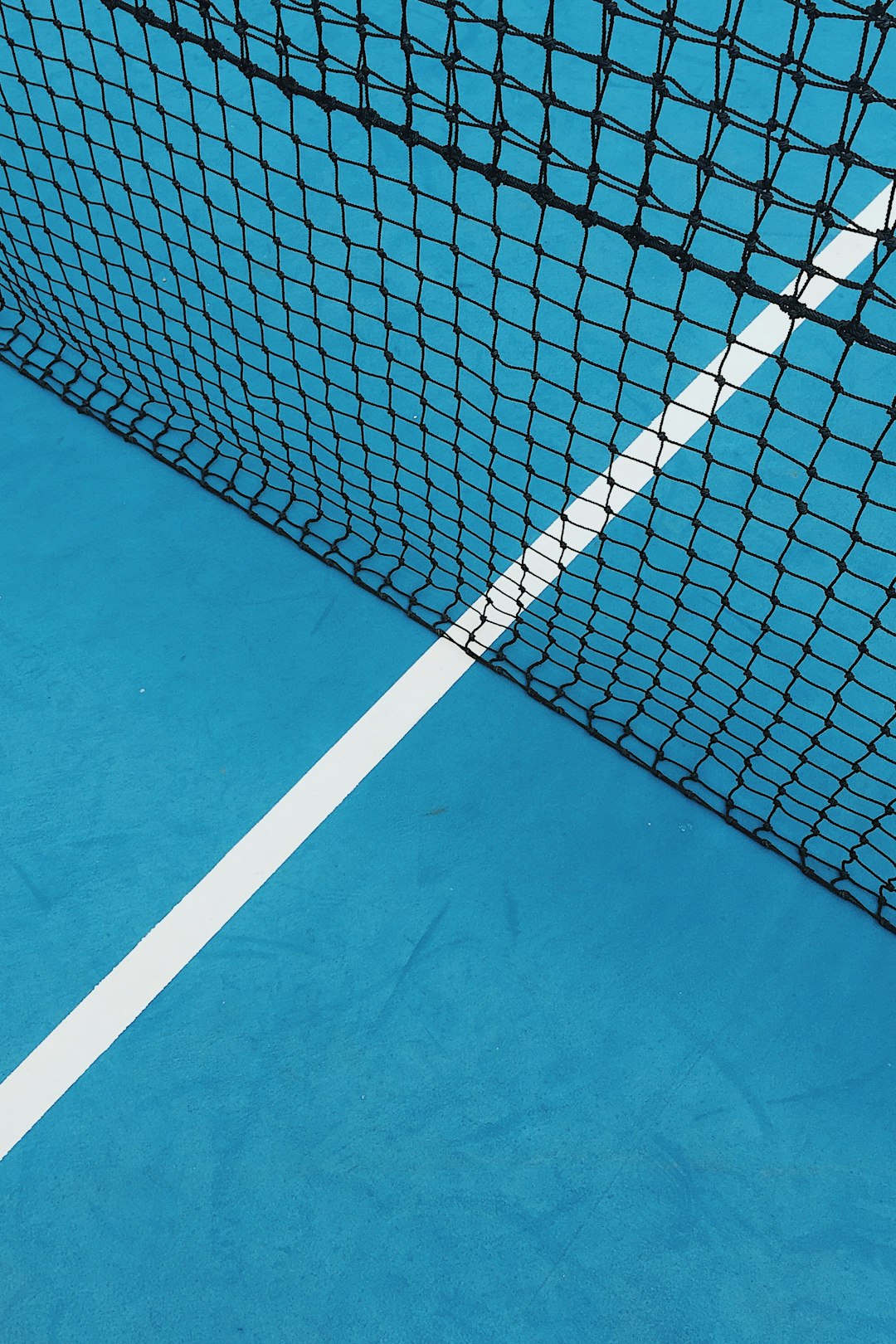
- Pickleball Net Height: 36 inches at the sidelines, 34 inches at the center
- Tennis Net Height: 42 inches at the posts, 36 inches at the center
A tennis net is noticeably higher at the posts and spans a wider court. The pickleball net is lower at the center than a tennis net, reducing the vertical barrier and allowing for softer trajectory shots.
This difference in height affects:
- Ball arc and clearance margins
- Serve mechanics
- Smash angles
Tennis players transitioning to pickleball often need time to adjust their muscle memory because the lower net changes shot dynamics significantly.
4. Surface Materials and Construction
Both pickleball and tennis courts commonly use hard surfaces such as asphalt or concrete with acrylic coatings. However, tennis courts are also frequently constructed with alternative surfaces, including:
- Clay
- Grass
- Artificial turf
Pickleball is overwhelmingly played on hard courts, though indoor wooden gym floors are also common.
Because pickleball players move shorter distances, surface cushioning requirements can differ slightly. Tennis courts often incorporate more extensive runoff areas surrounding the baseline and sidelines. This additional space enhances player safety during high-speed movement.
Recommended Space Around Courts
Pickleball:
- Minimum total space: 30 x 60 feet
- Preferred total space: 34 x 64 feet
Tennis:
- Minimum total space: 60 x 120 feet
The difference in buffer space requirements makes tennis courts much more land-intensive.
5. Gameplay Impact of Court Size
The dimensional differences produce meaningful changes in how each sport is played.
Pickleball Gameplay Characteristics
- Shorter reaction times at the net
- Emphasis on placement over power
- Frequent volleys, but restricted near the net
- Compact footwork patterns
Tennis Gameplay Characteristics
- Long baseline rallies
- Power serves exceeding 100 mph at high levels
- Extensive lateral coverage
- Greater endurance demands
Tennis emphasizes distance, speed, and endurance. Pickleball, by contrast, emphasizes precision, control, and reflexes within a condensed arena.
6. Line Visibility and Multi Use Considerations
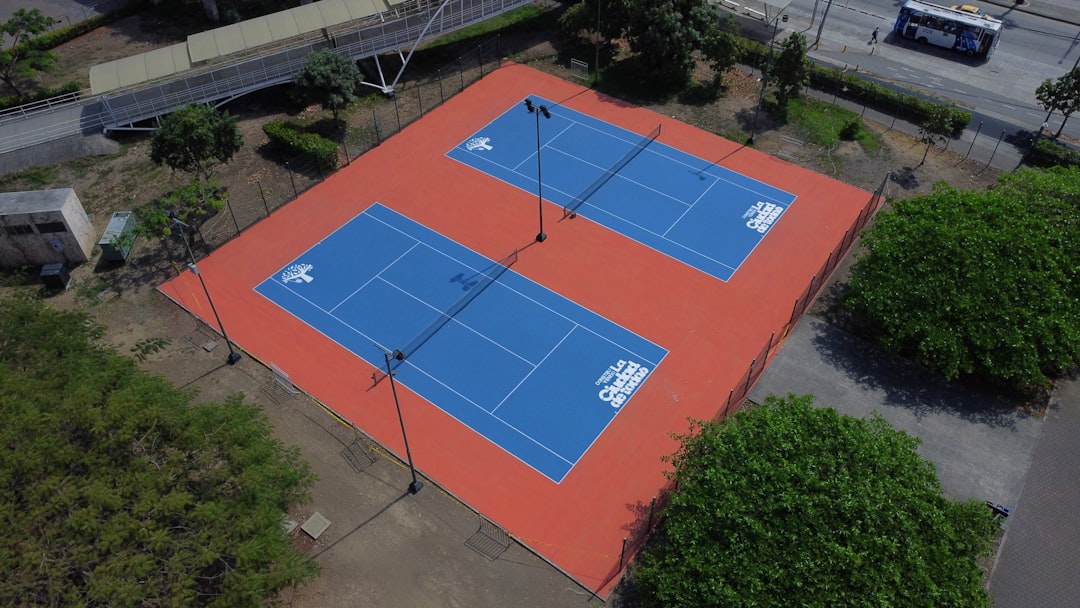
Many facilities overlay pickleball lines onto existing tennis courts. While this maximizes space efficiency, it can create visual complexity.
Key challenges include:
- Line confusion due to color overlap
- Reduced aesthetic clarity
- Interference with tennis play if not carefully planned
To mitigate confusion, professional installations use contrasting colors for pickleball lines and ensure proper spacing between adjacent temporary courts.
7. Cost Differences
Because of their size and space requirements, tennis courts are generally more expensive to construct.
Primary Cost Factors:
- Total surface area
- Fencing perimeter length
- Lighting systems
- Ground preparation
Installing a standalone pickleball court typically requires less paving, less fencing, and lower lighting infrastructure. However, adding permanent dedicated pickleball courts to an existing facility may involve resurfacing costs and line removal.
8. Side by Side Comparison
| Feature | Pickleball Court | Tennis Court |
|---|---|---|
| Playing Area | 20 x 44 feet | 36 x 78 feet (doubles) |
| Net Height (Center) | 34 inches | 36 inches |
| Non Volley Zone | Yes, 7 feet on each side | No |
| Typical Surface | Hard court | Hard, clay, grass |
| Total Recommended Space | 30 x 60 feet minimum | 60 x 120 feet minimum |
| Convertible Use | Fits on tennis court | Cannot fit on pickleball court |
9. Accessibility and Demographics
The compact size of pickleball courts makes the sport more accessible to a wider age range. Shorter distances and reduced court coverage allow older adults to compete effectively without extensive endurance demands.
Tennis, while accessible, generally requires:
- Greater aerobic capacity
- Longer sprinting distances
- More extensive training for competitive performance
This difference does not make one sport superior to the other. Rather, it underscores different physical profiles and facility planning considerations.
10. Conversion Possibilities
One frequent question concerns whether a tennis court can be converted into a pickleball court.
The answer is yes—with qualifications.
- Temporary nets can be installed
- Additional lines can be painted
- Portable systems allow seasonal adaptation
However, a pickleball court cannot be converted into a regulation tennis court due to insufficient space. This asymmetry is important for municipal planners and private developers who must decide which sport to prioritize.
Conclusion
Although pickleball and tennis courts share visual similarities, they differ significantly in size, structure, markings, and spatial requirements. Pickleball courts are smaller, include a unique non volley zone, and require less surrounding space. Tennis courts are larger, demand greater infrastructure investment, and support a faster, more expansive style of play.
Understanding these differences is not merely academic. For architects, facility managers, and community organizers, the choice between constructing a pickleball court or a tennis court has financial, spatial, and demographic implications. For players, the distinctions shape strategy, movement, and overall experience.
Both sports continue to thrive worldwide. Selecting the appropriate court depends on available land, target participants, and long-term usage goals. With careful planning, either option can become a lasting and valuable recreational asset.