Bowling is one of those sports that seems simple on the surface: roll a ball down a lane and knock over some pins. Yet beneath its straightforward appearance lies a rich history, a variety of types, and intriguing technical details. If you’ve ever found yourself watching a game, strolling past a lane, or gripping a bowling ball for the first time, you might have asked: How many pins are actually used in bowling? It might seem like a basic question, but the answer opens the door to a fascinating world of variations, traditions, rules, and even regional adaptations.
TLDR: How Many Pins Are in Bowling?
Most commonly, ten pins are used in standard bowling games, such as those seen in professional tournaments and most bowling alleys. However, not all bowling games use ten pins—there are several variations around the world that use more or fewer pins. Examples include duckpin, candlepin, and five-pin bowling, each of which has its own unique pin count and set of rules. So while ten pins dominate the sport, there’s more to the story depending on where and how you bowl.
The Classic Tenpin Bowling
The most popular form of bowling, especially in the United States and many other countries, is Tenpin Bowling. As the name implies, this version of the sport uses exactly ten pins, arranged in a triangular formation at the end of a 60-foot lane.
This formation features one pin in the front, followed by two in the second row, three in the third, and four at the very back:
- 1st Row: 1 pin (the head pin)
- 2nd Row: 2 pins
- 3rd Row: 3 pins
- 4th Row: 4 pins
These pins are set exactly 12 inches apart from center to center, offering just enough space to create challenging shot angles and demanding techniques even for seasoned professionals.
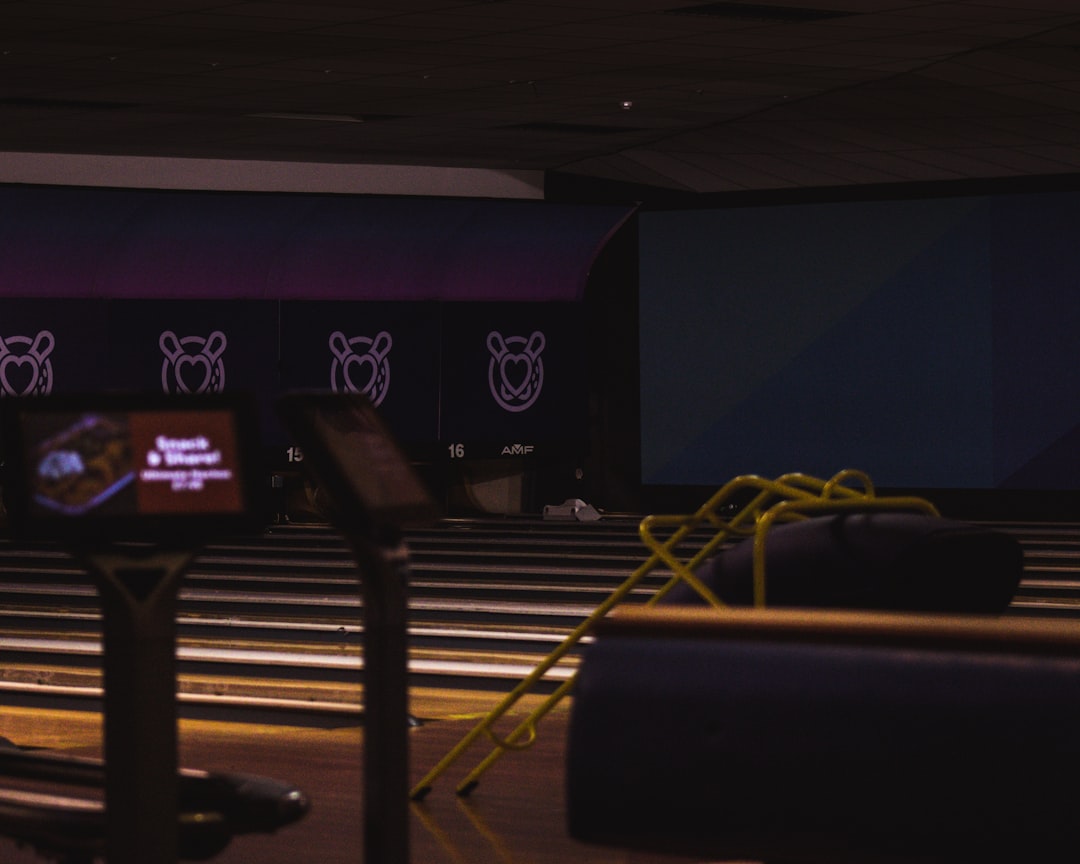
The object in Tenpin Bowling is to knock down all the pins within two tries (frames). A strike is when you knock down all ten on the first roll, while a spare happens if you clear the rest on your second attempt.
Variations with Different Pin Counts
Though Tenpin Bowling may be the most widespread, other forms of bowling do exist—and they often use different numbers of pins. Let’s look at some common variations:
1. Candlepin Bowling (New England and Maritime Canada)
Pin Count: 10
Although Candlepin Bowling uses ten pins like Tenpin, the similarity largely ends there. In this variation, pins are thinner and taller, resembling candles (hence the name), and are harder to knock down. The ball is also smaller, and each frame allows three rolls rather than two.
2. Duckpin Bowling
Pin Count: 10
Duckpin Bowling is another ten-pin variation, but with shorter and squatter pins. Like Candlepin, the ball is small and lacks finger holes. Players also get three tries per frame. The game is popular in the eastern United States and offers a surprisingly tough challenge.
3. Five-Pin Bowling (Canada)
Pin Count: 5
Invented in Canada in the early 1900s, Five-Pin Bowling is designed for players looking for a faster-paced alternative. The pins are arranged in a V shape, and each has a score attached to it—a unique feature not found in Tenpin or other formats:
- Head pin: 5 points
- Next two: 3 points each
- Last two: 2 points each
This gives players a possible 15 points per frame. The ball used is significantly smaller, allowing it to be held palm-size, and has no finger holes.

4. Ninepin Bowling (Europe)
Pin Count: 9
Popular in several European countries, Ninepin Bowling predates Tenpin Bowling and is seen as its ancestor. The pins are arranged in a diamond shape, and games are often team-based instead of individual. Scoring is a bit different, and in certain formats, only exact-point hits count—adding a strategic layer that can stump even seasoned Tenpin players.
Why the Number of Pins Matters
The number of pins greatly affects the dynamics of the game. Here’s how:
- Scoring Potential: More pins usually mean a higher score cap. In Five-Pin Bowling, the perfect game is 450; in Tenpin, it’s 300.
- Ball Size and Roll Strategy: Fewer pins often come with smaller balls. The lack of finger holes changes how the ball is gripped and released.
- Game Duration and Complexity: Fewer pins generally result in shorter games while also introducing unique scoring mechanics or rules that demand new strategies.
If you’re transitioning between formats, it’s not just the number of pins you’ll have to adapt to—it’s also the pins’ shapes, gameplay rules, lane conditions, and even the audience’s expectations.
Pin Construction and Design
No matter the number of pins, each type is crafted for specific performance characteristics. In Tenpin Bowling, for instance, pins are made from hard maple wood and coated with a durable plastic material. They stand 15 inches tall and weigh about 3.5 pounds.
In games like Candlepin and Duckpin Bowling, the reduced weight and altered shapes change how they bounce upon being hit. That’s one reason these variations are generally considered more difficult: pins don’t assist one another as much in falling down, reducing the chances of chain reactions like those seen in Tenpin strikes.
The Symbolism of Ten
Ten isn’t just an arbitrary number. Psychologically, it represents completeness and balance—it fits nicely into a frame-scoring system, lending structure to bowling games. The bowling scorecard consists of ten frames, reinforcing this neat symmetry. This makes Tenpin Bowling not only satisfying in gameplay but elegant in design.
Bowling Across Cultures
Different societies have cherished bowling in their own styles. From ancient Egyptians rolling stones at objects mimicking modern pins, to Germans using bowling games in religious rituals, the pin count has fluctuated to suit cultural tastes, available materials, and traditional scoring mechanics.
In fact, some anecdotal records suggest even more obscure types, such as sevenpin or even twelvepin games played in local or family settings. These never achieved widespread popularity but do showcase how versatile the concept of bowling truly is.
Conclusion
So, how many pins are in bowling? The most common answer is ten—especially in the globally recognized Tenpin format. However, the world of bowling is broader than many realize. Depending on where you are, and which version of the sport you’re playing, you might be bowling with five, nine, or even ten differently shaped and scored pins.
Understanding the role and number of pins not only helps you play better but also deepens your appreciation for the rich and varied tapestry that is the global sport of bowling.