Few questions in basketball spark as much curiosity as how many championship rings Michael Jordan has won. His legacy with the Chicago Bulls shaped an era of the NBA and continues to influence players decades after his retirement. To truly understand the significance of his achievements, you have to look beyond the number itself and explore the context, dominance, and teamwork that made those victories possible.
TLDR: Michael Jordan won six NBA championship rings with the Chicago Bulls. He earned them in two separate three-peat runs: 1991–1993 and 1996–1998. Jordan was named Finals MVP in all six championship victories, underscoring his dominance on the sport’s biggest stage. His perfect 6–0 record in the NBA Finals remains one of the defining achievements in basketball history.
Michael Jordan’s Championship Rings: The Short Answer
Michael Jordan has six NBA championship rings. He won all of them with the Chicago Bulls during the 1990s. These championships came in two distinct periods of dominance commonly referred to as “three-peats.”
- First Three-Peat: 1991, 1992, 1993
- Second Three-Peat: 1996, 1997, 1998
Remarkably, Jordan never lost an NBA Finals series. Whenever he reached the Finals, he finished the job. That perfect 6–0 record is often cited in debates about the greatest basketball player of all time.
The First Three-Peat (1991–1993)
By the late 1980s, Michael Jordan was already recognized as one of the most electrifying scorers in NBA history. However, individual brilliance had not yet translated into championships. The Detroit Pistons’ “Bad Boys” repeatedly eliminated the Bulls from the playoffs, presenting a physical and psychological barrier.
Everything changed in 1991.
1991: The First Ring
In the 1990–91 season, the Bulls defeated the Los Angeles Lakers in the NBA Finals. This victory was particularly symbolic: Jordan overcame Magic Johnson, one of the league’s most iconic figures.
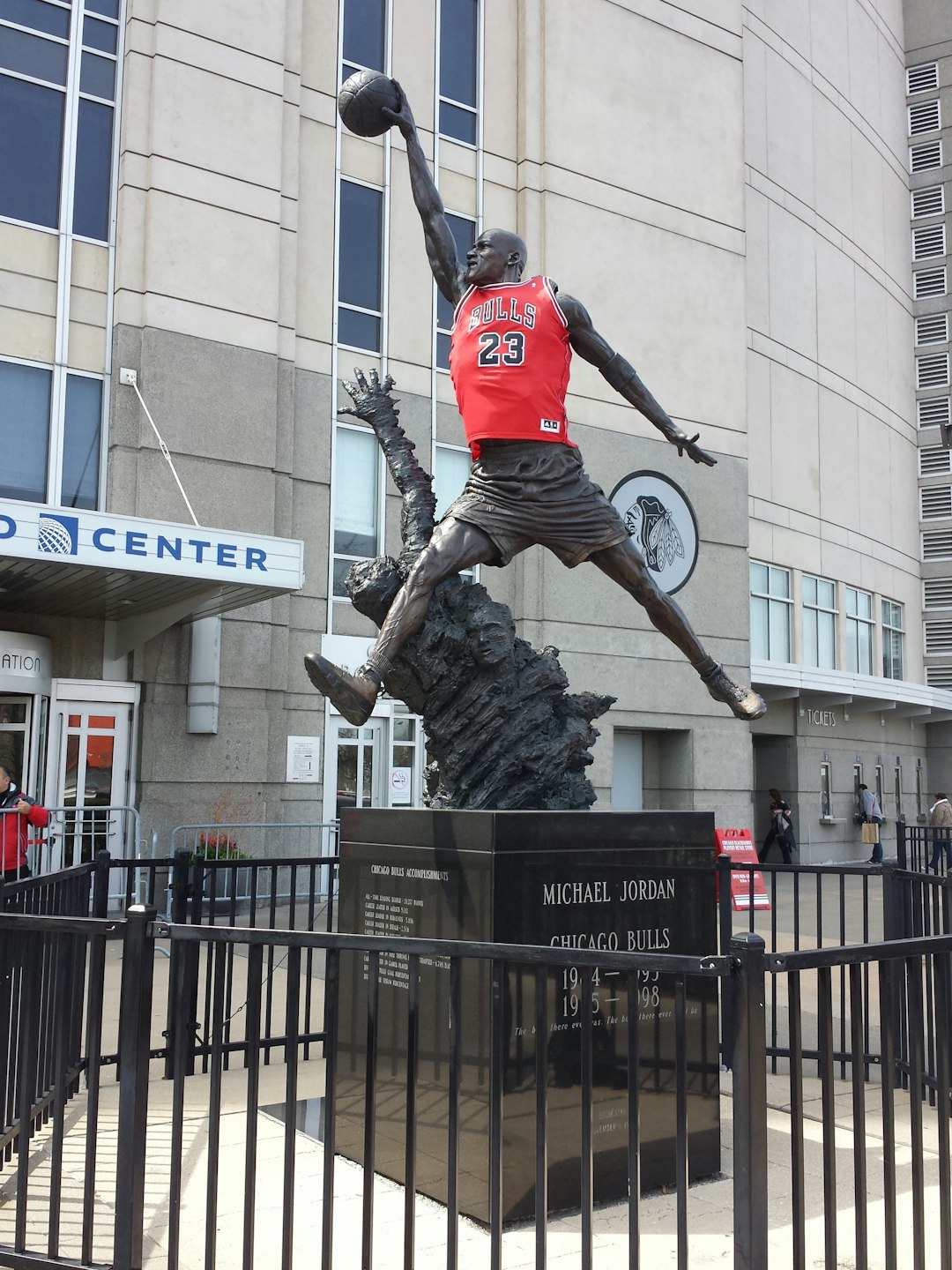
The Bulls won the series 4–1, and Jordan secured his first NBA Finals MVP award. It was the beginning of a dynasty.
1992: Back-to-Back Titles
The following year, Chicago faced the Portland Trail Blazers. Jordan delivered one of the most memorable performances in Finals history, including a six three-pointer half in Game 1, followed by his famous shrug toward the scorer’s table.
The Bulls repeated as champions, cementing their dominance.
1993: The First Three-Peat Completed
In 1993, Chicago squared off against the Phoenix Suns, led by league MVP Charles Barkley. Jordan averaged an astonishing 41.0 points per game in the series—still an NBA Finals record.
With the series win, the Bulls achieved their first three-peat. Jordan had three rings and three Finals MVP awards in just three seasons.
A Sudden Retirement
Following the 1993 championship, Jordan shocked the world by retiring from basketball. The death of his father, James Jordan Sr., deeply affected him, and he chose to pursue a brief career in professional baseball.
During his absence, the Bulls remained competitive but were unable to secure another title. The NBA landscape began to shift, with teams like the Houston Rockets capturing championships in 1994 and 1995.
But Jordan wasn’t finished.
The Return and the Second Three-Peat (1996–1998)
In March 1995, Jordan returned to the NBA with a simple message: “I’m back.” Though the Bulls fell short in the 1995 playoffs, the following season would become legendary.
1996: A Record-Breaking Season
The 1995–96 Chicago Bulls finished the regular season with a then-record 72–10 record. Jordan led a historically dominant team that included Scottie Pippen, Dennis Rodman, and coach Phil Jackson.
In the Finals, the Bulls defeated the Seattle SuperSonics. Jordan claimed his fourth ring and fourth Finals MVP.
Image not found in postmeta1997: “The Flu Game”
The 1997 Finals against the Utah Jazz featured one of the most iconic performances in sports history—the “Flu Game.” Severely ill, Jordan scored 38 points in Game 5, pushing Chicago to a pivotal victory.
The Bulls defeated the Jazz in six games, giving Jordan his fifth championship.
1998: The Final Shot
The 1998 Finals once again matched the Bulls against the Utah Jazz. With the series at 3–2 in Utah’s favor in Game 6, Jordan delivered one of the most memorable moments in NBA history.
After stealing the ball from Karl Malone, Jordan calmly dribbled downcourt and hit a game-winning jumper over Bryon Russell with 5.2 seconds remaining.
Image not found in postmetaThat shot secured his sixth championship and sixth Finals MVP. It marked the end of the Bulls dynasty and, effectively, Jordan’s time in Chicago.
Six Rings, Six Finals MVPs
One of the most extraordinary aspects of Jordan’s six championships is that he was named Finals MVP in every single one. This means that in all six championship series, he was considered the most valuable player on the court.
Here’s a quick breakdown:
- 1991 – Finals MVP
- 1992 – Finals MVP
- 1993 – Finals MVP
- 1996 – Finals MVP
- 1997 – Finals MVP
- 1998 – Finals MVP
No player in NBA history has achieved Finals MVP honors six times without a loss in the Finals.
How Do Jordan’s Rings Compare to Other Legends?
When discussing championships, comparisons are inevitable. While Jordan has six rings, other NBA legends have their own impressive totals:
- Bill Russell: 11 rings
- Kareem Abdul-Jabbar: 6 rings
- Magic Johnson: 5 rings
- Kobe Bryant: 5 rings
- LeBron James: 4 rings (as of 2026)
Bill Russell holds the all-time record with 11 championships, but they came in a different era with fewer teams. Jordan’s case is often strengthened by the modern competitiveness of the league during the 1990s and his unblemished Finals record.
For many fans, the combination of:
- Six rings
- A 6–0 Finals record
- Six Finals MVP awards
- Ten scoring titles
- Five regular-season MVP awards
cements his place as the greatest of all time.
The Team Behind the Rings
Although Jordan was the centerpiece, championships are team achievements. Several key figures were instrumental in the Bulls’ six titles:
- Scottie Pippen: Elite defender and versatile scorer
- Dennis Rodman: Rebounding powerhouse
- Phil Jackson: Hall of Fame coach known for the Triangle Offense
- Role players: Steve Kerr, Toni Kukoč, Horace Grant, and others
The synergy between superstar talent and strategic coaching made Chicago nearly unstoppable.
Did Jordan Win Any Rings With the Wizards?
After his second retirement in 1999, Jordan returned once more in 2001—this time with the Washington Wizards. Though he delivered impressive individual performances for a player in his late 30s and early 40s, he did not win any additional championships.
All six of his rings were earned with the Chicago Bulls.
Why the Six Rings Still Matter Today
In today’s NBA, player movement is common, with superstars frequently changing teams to pursue titles. Jordan’s championships all came with one franchise, adding a layer of loyalty and continuity to his legacy.
His six rings symbolize:
- Consistency
- Clutch performance
- Competitive dominance
- Mental toughness
The image of Jordan holding up six fingers has become part of basketball iconography. Even decades later, the debate around his championship count fuels conversations comparing eras, competition, and individual impact.
More Than Just Rings
While the number six is central to his legacy, rings alone don’t tell the whole story. Jordan transformed the NBA into a global phenomenon. His partnership with Nike led to the Air Jordan brand, reshaping athlete endorsements forever. Television ratings soared during his Finals appearances, and basketball’s international popularity exploded.
His championships weren’t just victories; they were global events.
Final Thoughts
So, how many rings does Michael Jordan have? The answer is six—but the impact of those six championships goes far beyond a simple number.
They represent two separate dynasties, countless iconic moments, and a level of excellence rarely seen in professional sports. From his first breakthrough in 1991 to his legendary final shot in 1998, each ring added another layer to a career that continues to define basketball greatness.
In the end, the six rings are not just a statistic—they are a symbol of dominance, perfection on the Finals stage, and an enduring legacy that still shapes the NBA today.